Working time reduction is often perceived as a solution that primarily benefits employees. However, experience from organisations shows that employees are not always willing to initiate discussions about introducing such arrangements with their employers. In most cases, this reluctance stems from concerns about potential reductions in pay, increased work intensity, or a deterioration in working conditions following the implementation of these changes.
The project team supports employees and their representatives by:
identifying the concerns and expectations of both employees and employers regarding the implementation of working time reduction, together with a critical assessment of these issues based on scientific evidence;
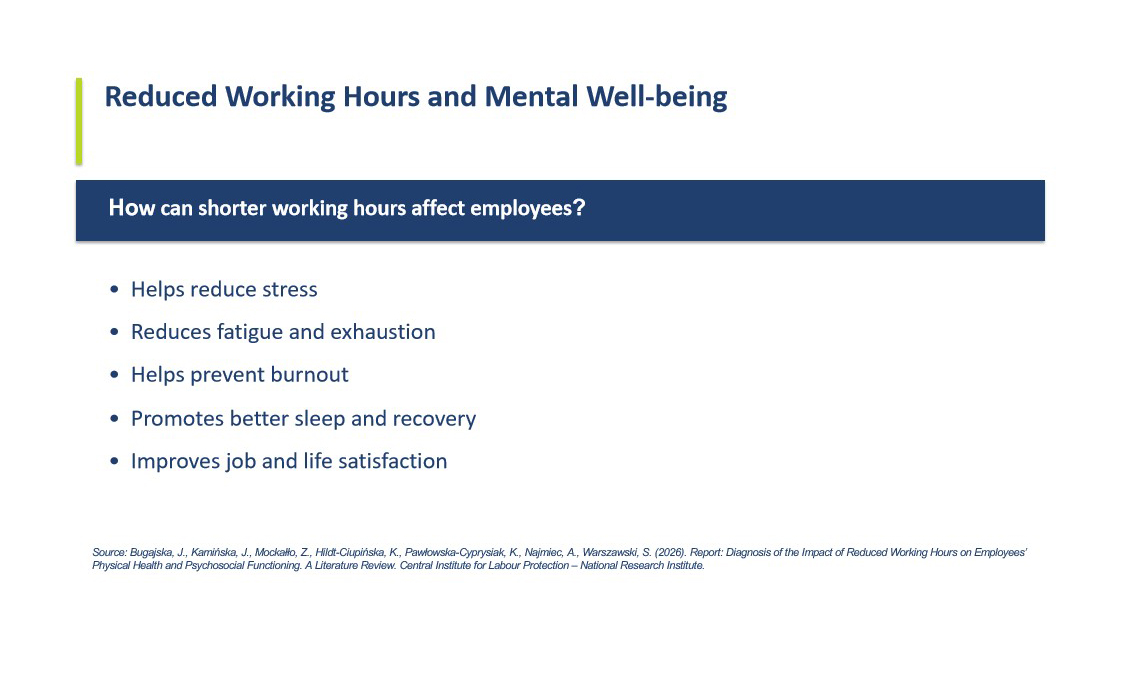
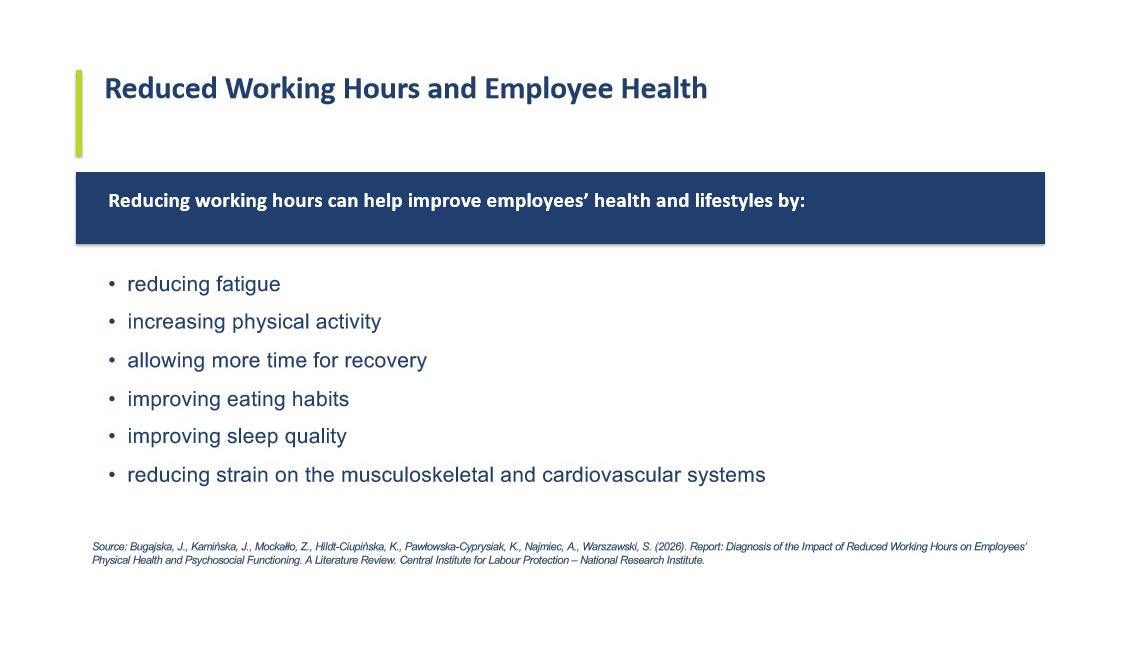
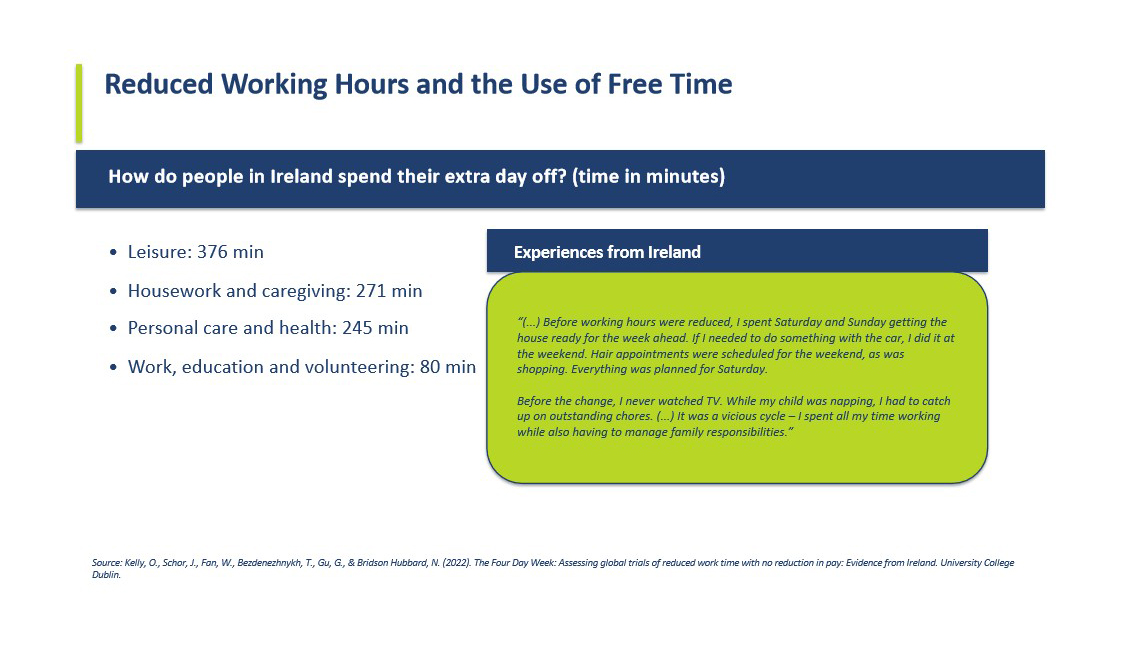
presenting research findings on the impact of working time reduction on employees’ physical health, mental wellbeing, and work performance;
identifying national and international good practices that demonstrate effective cooperation between employees and employers during the implementation of working time reduction;
developing information and educational materials to help employees better understand the implications of working time reduction and prepare for constructive dialogue with their employers.
RESEARCH FINDINGS
GOOD PRACTICES
Realizatorzy projektu starają się wspomóc pracodawców poprzez:
One of the project’s key activities is the identification and analysis of good practices for implementing working time reduction in organisations. By the end of July 2027, examples of good practices from organisations in Poland will be available, followed by examples from selected European countries by the end of August 2027. This section will present practical approaches that support effective cooperation between employees and employers, work organisation, social dialogue, and the promotion of employee wellbeing throughout the implementation of working time reduction.
Do końca stycznia 2028 r. zostanie udostępnione Narzędzie oceny możliwości wdrożenia skróconego czasu pracy. Będzie ono wspierało przedsiębiorców w ocenie organizacyjnych, kadrowych i ekonomicznych uwarunkowań wdrożenia skróconego czasu pracy w ich przedsiębiorstwie. Narzędzie będzie miało charakter samooceny i na podstawie odpowiedzi użytkownika wskaże obszary sprzyjające wdrożeniu oraz potencjalne bariery wymagające wcześniejszego przygotowania.